◢ NARCOTRÁFICO ◣

Cinco detenidos, tres españoles, un colombiano y un albanés, por actos de piratería en el Estrecho.

✎Redaccion
Cinco detenidos, tres españoles, un colombiano y un albanés, por actos de piratería en el Estrecho.
Idioma

Cinco detenidos, tres españoles, un colombiano y un albanés, por actos de piratería en el Estrecho.

La investigación judicial ha tomado un rumbo sin precedentes al imputar, por primera vez en España, el delito de piratería marítima a los cinco ocupantes de una embarcación que atacó a la patrullera Río Guadalmedina durante una persecución en las aguas cercanas al Guadalquivir, no muy lejos de su desembocadura. Este delito había sido anteriormente atribuido a narcotraficantes, aunque en un contexto diferente: la quema de su propio velero, que resultó en la muerte de un agente de Aduanas.

El caso actual se originó a partir de un incidente en el que cuatro agentes resultaron heridos y la embarcación oficial de la Guardia Civil sufrió daños significativos. La nacionalidad de los acusados, tres españoles, un colombiano y un albanés, sugiere claramente que se trataba de una operación de tráfico de cocaína a gran escala: el supuesto líder de la red balcánica que recibiría la droga en Europa, el 'notario' de la organización sudamericana que la enviaba, y los miembros del clan español, provenientes del Campo de Gibraltar.

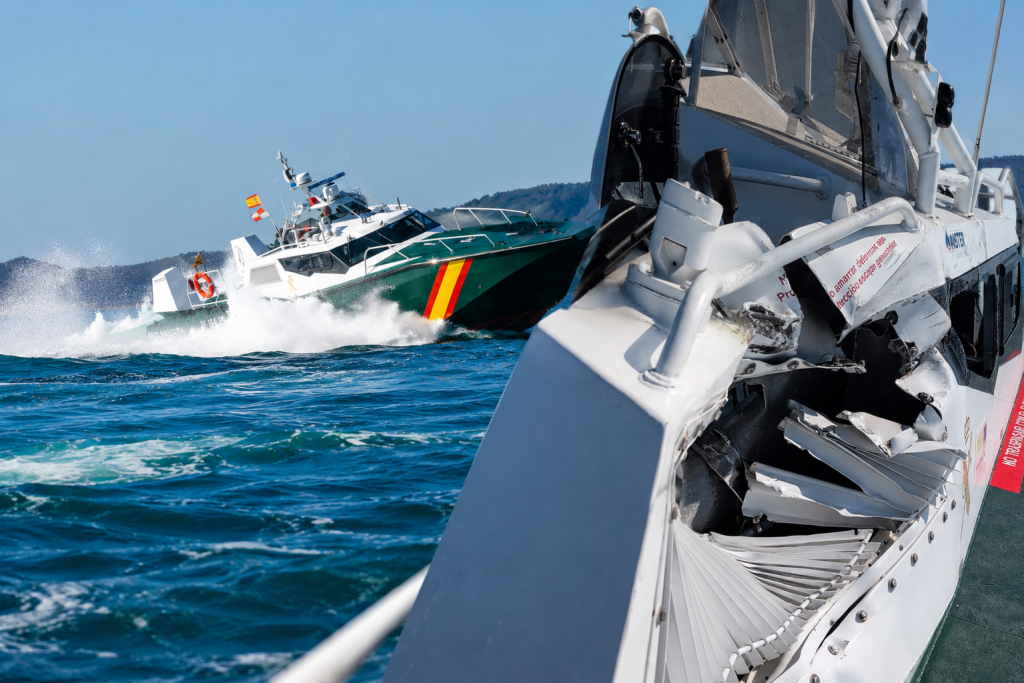
La agresividad del narcotráfico hacia los agentes que intentan detener sus actividades se manifiesta nuevamente en las aguas del sur de España, pero ahora la Justicia ha tomado medidas más estrictas. Así, los cinco ocupantes de la embarcación relacionada con el suministro de narcolanchas en el contexto de la introducción de droga han sido encarcelados de manera provisional tras una peligrosa persecución en la que, supuestamente, embistieron en varias ocasiones a una patrullera del Instituto Armado. Los daños sufridos por la patrullera son evidentes, y como resultado, la desembocadura del Guadalquivir se encuentra ahora en una situación de vulnerabilidad.
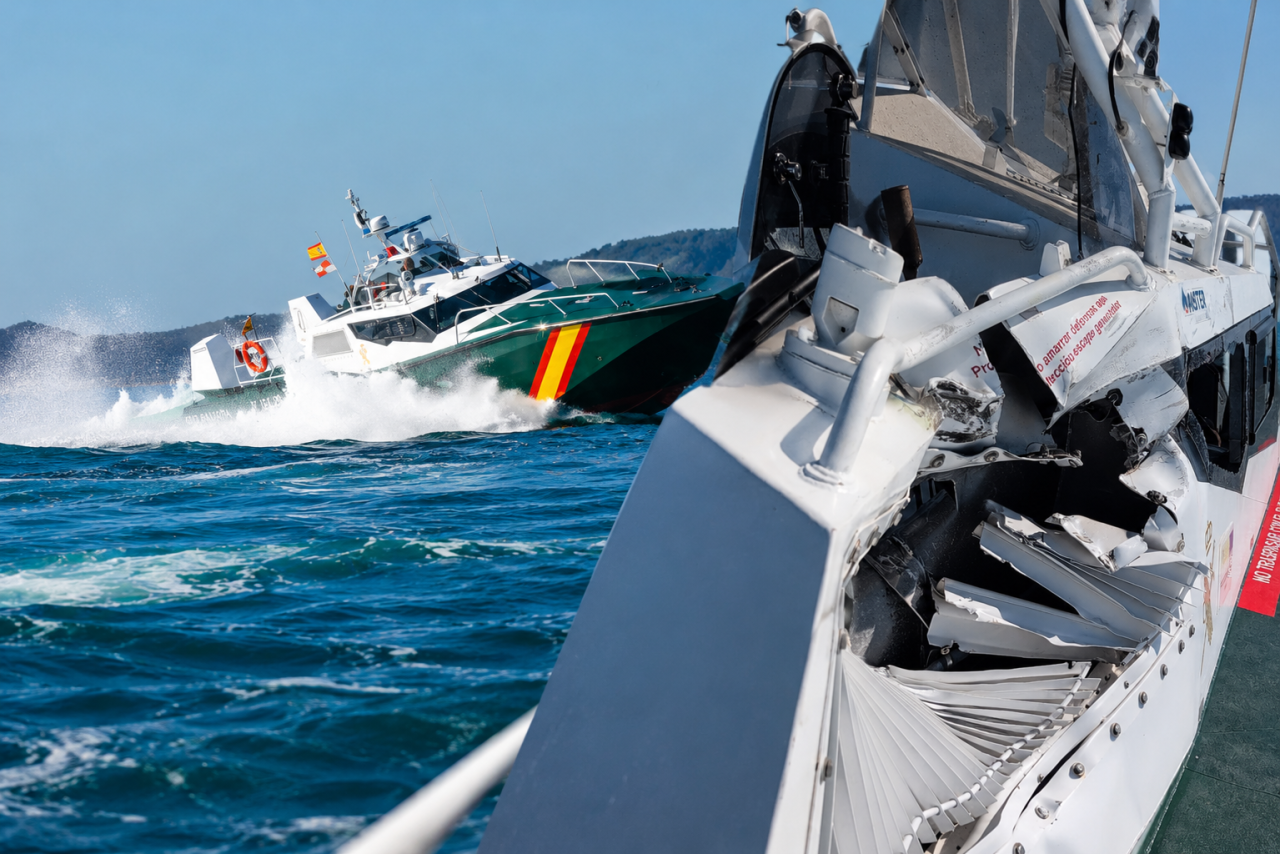
Esto se debe a que la lancha embestida, un modelo Aister HS60 de última generación, representa un obstáculo, por su maniobrabilidad y velocidad, para las entradas de droga en narcolanchas en esa área. Sin embargo, al estar fuera de servicio, y aunque ha sido reemplazada por la río Irati, el entorno de Sanlúcar de Barrameda está siendo dominado por los narcotraficantes. Esta nueva patrullera, considerablemente más lenta, no es efectiva para frenar las actividades de las mafias de drogas.

La novedad del caso va más allá de las detenciones. El Tribunal de Instancia de Sanlúcar de Barrameda ha abierto un procedimiento judicial sin antecedentes en España al imputar a los cinco investigados un presunto delito de piratería marítima, además de contrabando y atentado contra agentes de la autoridad. Esta decisión responde a la violencia empleada durante la fuga y a la interpretación judicial de que la proa de la embarcación fue utilizada como un arma para atacar a los agentes y facilitar la huida.

Los acontecimientos se remontan al jueves 22 de octubre, cuando los efectivos del Servicio Marítimo Provincial de la Guardia Civil de Cádiz detectaron un presunto trasvase de garrafas de gasolina entre embarcaciones de alta velocidad en las cercanías de la desembocadura del Guadalquivir. La operación tenía como objetivo frustrar una maniobra de petaqueo, actividad fundamental para abastecer de combustible a las lanchas empleadas por las organizaciones de narcotráfico.

La presencia de la patrullera Río Guadalmedina provocó la huida de una de las embarcaciones. Sus ocupantes iniciaron un escape a gran velocidad, dando inicio a un seguimiento marítimo que duró aproximadamente una hora y cuarenta minutos, de acuerdo con la información divulgada sobre las actuaciones judiciales.

Los sospechosos no se limitaron a intentar escapar, sino que embistieron repetidamente a la embarcación oficial. La colisión causó daños considerables en la patrullera y dejó a cuatro guardias civiles heridos, todos ellos con lesiones de carácter leve.

A pesar del impacto y los daños sufridos, los agentes continuaron con la persecución hasta que lograron interceptar la embarcación frente a las costas de Huelva y detener a los cinco ocupantes.

La resolución judicial representa un avance significativo en la respuesta penal ante los ataques contra las fuerzas de seguridad en el mar. Hasta este momento, incidentes de esta índole eran comúnmente investigados como delitos de atentado contra la autoridad, lesiones y daños. En este caso, el juez considera que hay indicios suficientes para incluir también la piratería marítima.

La imputación se extiende a los cinco tripulantes, no solo al individuo que conducía la embarcación. El magistrado opina que la responsabilidad de los ocupantes debe ser analizada a partir de su actuación conjunta durante la huida y de las circunstancias que rodearon el ataque a la patrullera.

Los cinco individuos permanecen en prisión provisional, comunicada y sin posibilidad de fianza, mientras avanza el procedimiento judicial. La investigación determinará el grado de participación de cada uno y las responsabilidades penales que pudieran derivarse de los hechos.

El caso pone nuevamente en el centro de atención a los denominados petaqueros, quienes son responsables de transportar y suministrar combustible a las embarcaciones de alta velocidad que operan para las redes de narcotráfico. Sin este abastecimiento, las narcolanchas enfrentan mayores dificultades para permanecer en el mar durante varias horas y sostener sus desplazamientos y operaciones logísticas.

La desembocadura del Guadalquivir y la costa gaditana siguen siendo escenarios de intervenciones contra estas redes. La persecución de octubre también demuestra el riesgo que enfrentan los agentes del Servicio Marítimo cuando las embarcaciones sospechosas recurren a maniobras violentas para evadir su captura.

Five arrested, three Spaniards, one Colombian, and one Albanian, for acts of piracy in the Strait.

The judicial investigation has taken an unprecedented turn by charging, for the first time in Spain, the crime of maritime piracy against the five occupants of a vessel that attacked the patrol boat Río Guadalmedina during a chase in the waters near the Guadalquivir, not far from its mouth. This crime had previously been attributed to drug traffickers, although in a different context: the burning of their own yacht, which resulted in the death of a Customs officer.

The current case originated from an incident in which four agents were injured and the official vessel of the Civil Guard suffered significant damage. The nationality of the accused, three Spaniards, one Colombian, and one Albanian, clearly suggests that it was a large-scale cocaine trafficking operation: the alleged leader of the Balkan network who would receive the drug in Europe, the 'notary' of the South American organization sending it, and the members of the Spanish clan from the Campo de Gibraltar.

The aggression of drug trafficking towards agents attempting to stop their activities is once again evident in the waters of southern Spain, but now Justice has taken stricter measures. Thus, the five occupants of the vessel related to the supply of narcolanchas in the context of drug introduction have been provisionally imprisoned following a dangerous pursuit in which they allegedly rammed a patrol boat of the Armed Institute several times. The damage suffered by the patrol boat is evident, and as a result, the mouth of the Guadalquivir is now in a vulnerable situation.

This is because the rammed boat, a state-of-the-art Aister HS60 model, represents an obstacle, due to its maneuverability and speed, for drug entries in narcolanchas in that area. However, being out of service, and although it has been replaced by the río Irati, the environment of Sanlúcar de Barrameda is being dominated by drug traffickers. This new patrol boat, significantly slower, is ineffective in curbing the activities of drug mafias.

The novelty of the case goes beyond the arrests. The Court of First Instance of Sanlúcar de Barrameda has opened a judicial procedure without precedent in Spain by charging the five investigated with an alleged crime of maritime piracy, in addition to smuggling and assault against agents of the authority. This decision responds to the violence employed during the escape and to the judicial interpretation that the bow of the vessel was used as a weapon to attack the agents and facilitate the escape.

The events date back to Thursday, October 22, when the Provincial Maritime Service of the Civil Guard of Cádiz detected a suspected transfer of gasoline jerrycans between high-speed vessels near the mouth of the Guadalquivir. The operation aimed to thwart a petaqueo maneuver, a fundamental activity to supply fuel to the boats used by drug trafficking organizations.

The presence of the patrol boat Río Guadalmedina prompted one of the vessels to flee. Its occupants initiated a high-speed escape, leading to a maritime chase that lasted approximately one hour and forty minutes, according to the information released about the judicial actions.

The suspects did not limit themselves to attempting to escape but repeatedly rammed the official vessel. The collision caused considerable damage to the patrol boat and left four Civil Guard officers injured, all with minor injuries.

Despite the impact and the damage suffered, the agents continued the pursuit until they managed to intercept the vessel off the coast of Huelva and arrest the five occupants.

The judicial resolution represents a significant advance in the criminal response to attacks against security forces at sea. Until now, incidents of this nature were commonly investigated as crimes of assault against authority, injuries, and damages. In this case, the judge considers that there is sufficient evidence to also include maritime piracy.

The charge extends to all five crew members, not just the individual who was driving the vessel. The magistrate believes that the responsibility of the occupants should be analyzed based on their joint actions during the escape and the circumstances surrounding the attack on the patrol boat.

The five individuals remain in provisional detention, communicated and without the possibility of bail, while the judicial procedure advances. The investigation will determine the degree of participation of each and the criminal responsibilities that may arise from the events.

The case once again brings attention to the so-called petaqueros, who are responsible for transporting and supplying fuel to the high-speed vessels operating for drug trafficking networks. Without this supply, narcolanchas face greater difficulties in remaining at sea for several hours and sustaining their movements and logistical operations.

The mouth of the Guadalquivir and the Cádiz coast continue to be scenes of interventions against these networks. The October chase also demonstrates the risk faced by agents of the Maritime Service when suspicious vessels resort to violent maneuvers to evade capture.

Cinco detenidos, tres españoles, un colombiano y un albanés, por actos de piratería en el Estrecho. | NarcoObservatorio